Artificial Intelligence (AI) has emerged as a transformative force in the healthcare industry, offering innovative solutions to enhance patient care, streamline processes, and improve outcomes. The integration of AI technologies is revolutionizing every aspect of healthcare delivery, from diagnosis and treatment planning to administrative tasks and patient management. By leveraging machine learning algorithms and data analytics, AI enables healthcare providers to make data-driven decisions, identify patterns, and predict outcomes with unprecedented accuracy and efficiency.
Step into the future of healthcare with the remarkable rise of artificial intelligence, revolutionizing medical diagnosis, surgery, personalized treatments, and more.
This article delves into the pivotal role of artificial intelligence in revolutionizing healthcare, exploring its applications, benefits, challenges, and ethical considerations.
Applications of AI in Medical Diagnosis:
In the realm of medical diagnosis, AI algorithms are proving to be invaluable tools for healthcare professionals. By analyzing medical images, such as X-rays, MRIs, and CT scans, AI systems can detect subtle abnormalities and patterns that may not be easily recognizable to the human eye. This leads to faster and more accurate diagnoses, allowing physicians to initiate timely interventions and treatment plans.
Moreover, AI-powered diagnostic tools can process large datasets from diverse sources, including patient histories, genetic information, and clinical data, to identify risk factors, predict disease progression, and recommend personalized treatment options. For example, AI algorithms can assess a patient's genetic predisposition to certain diseases, analyze their response to previous treatments, and suggest targeted therapies tailored to their unique medical profile.
By harnessing the power of AI in medical diagnosis, healthcare providers can improve diagnostic accuracy, reduce misdiagnosis rates, and ultimately, enhance patient outcomes. These advancements not only benefit patients by ensuring timely and effective treatments but also empower healthcare professionals with valuable insights and decision support tools to deliver high-quality care.
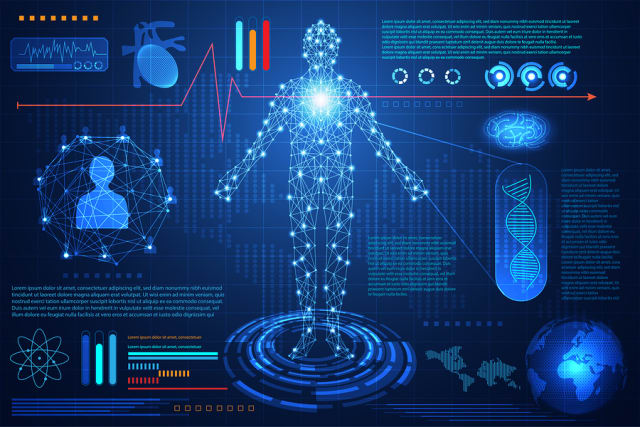
Introduction to AI in Healthcare:
One of the key areas where AI is making a significant impact is in medical diagnosis. AI algorithms can analyze vast amounts of complex data, including medical images, genetic information, and patient records, to assist healthcare professionals in diagnosing diseases more quickly and accurately. This not only saves valuable time but also improves patient outcomes by facilitating early detection and personalized treatment plans for conditions such as cancer, cardiovascular diseases, and neurological disorders.
Furthermore, AI-powered healthcare management systems are transforming the way healthcare facilities operate. These systems automate administrative tasks, optimize resource allocation, and enhance communication between healthcare teams and patients. From scheduling appointments and managing electronic health records to implementing predictive analytics for disease prevention, AI-driven solutions are driving efficiency and improving the overall patient experience in healthcare settings.
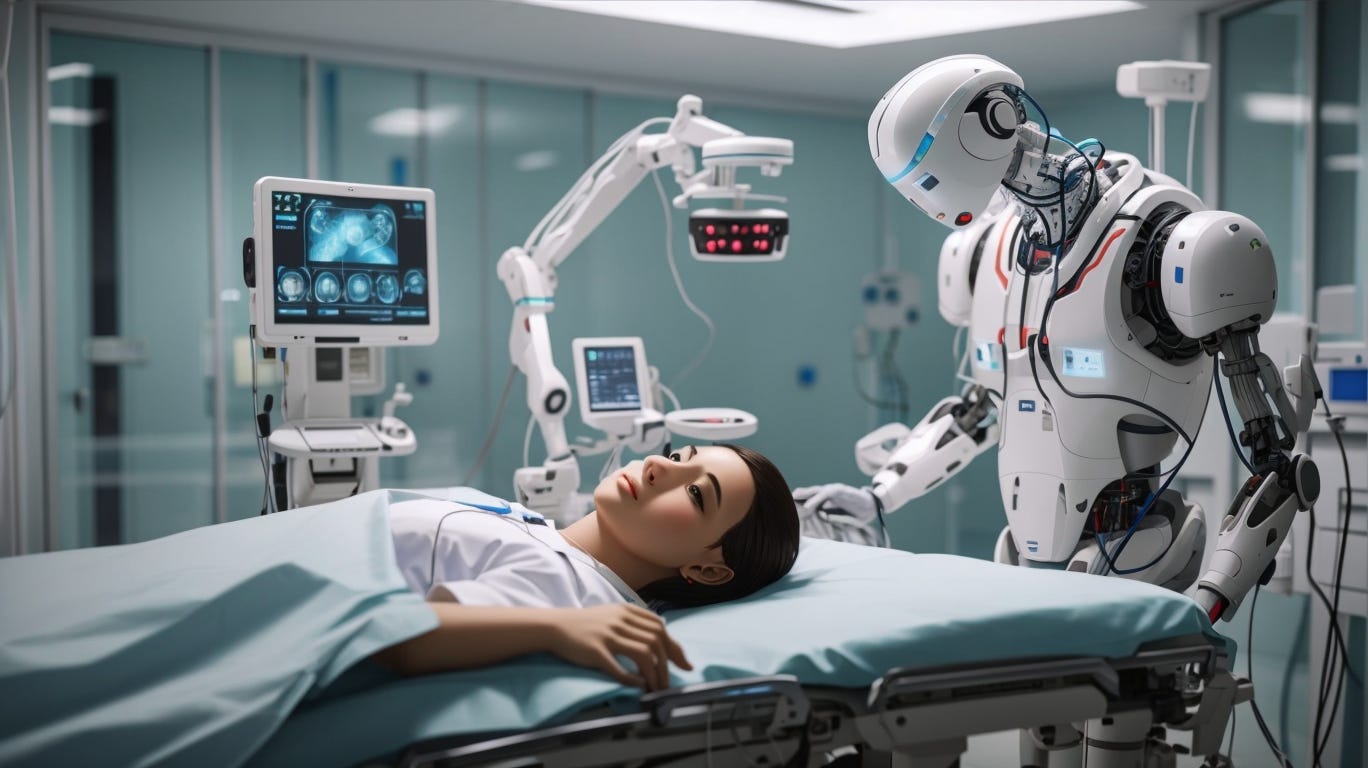
AI-Powered Healthcare Management Systems:
AI-driven healthcare management systems are revolutionizing the way healthcare organizations operate, from hospitals and clinics to pharmaceutical companies and research institutions. These systems leverage AI technologies, such as machine learning, natural language processing, and predictive analytics, to automate administrative tasks, streamline workflows, and optimize resource allocation.
One of the key advantages of AI-powered healthcare management systems is their ability to handle vast amounts of data efficiently. By integrating electronic health records (EHRs), medical imaging data, lab results, and patient demographics, these systems provide healthcare professionals with comprehensive and real-time insights into patient health, treatment outcomes, and population health trends.
Additionally, AI-driven solutions enable predictive analytics and decision support tools that can forecast patient demand, identify high-risk individuals, and recommend personalized care plans. For example, AI algorithms can analyze historical data to predict patient readmissions, flag potential medication errors, and optimize hospital bed utilization, leading to improved operational efficiency and cost savings for healthcare organizations.
Furthermore, AI-powered chatbots and virtual assistants are enhancing patient engagement and communication by providing round-the-clock support, answering inquiries, scheduling appointments, and delivering personalized health education. These digital tools not only improve patient satisfaction but also free up healthcare staff to focus on more complex and critical tasks, ultimately enhancing the overall quality of care.
In summary, AI-powered healthcare management systems offer a wide range of benefits, including improved operational efficiency, enhanced patient care, reduced costs, and better decision-making capabilities for healthcare organizations. As AI continues to evolve and integrate into the healthcare ecosystem, it is poised to drive significant advancements and innovations in patient-centric care delivery.